Bishop Eluke Declares 35th CIWA Theology Week Conference Open
—March 25, 2026
Port Harcourt City, March 23, 2026: Appolonia Dzelabvem, Roseline Egbuchulem, Victor Yacubu, Wilson Baba
The 35th Theology Week of the Catholic Institute of West Africa opened on Monday, March 23, 2026, with a solemn Eucharistic celebration at the Holy Rosary Chaplaincy, CIWA, marking the beginning of what is widely regarded as one of the most important annual theological gatherings in West Africa. This year’s conference is devoted to the theme “Theology and Human Suffering in Contemporary Africa,” a subject that speakers described as both urgent and unavoidable in the present social climate.
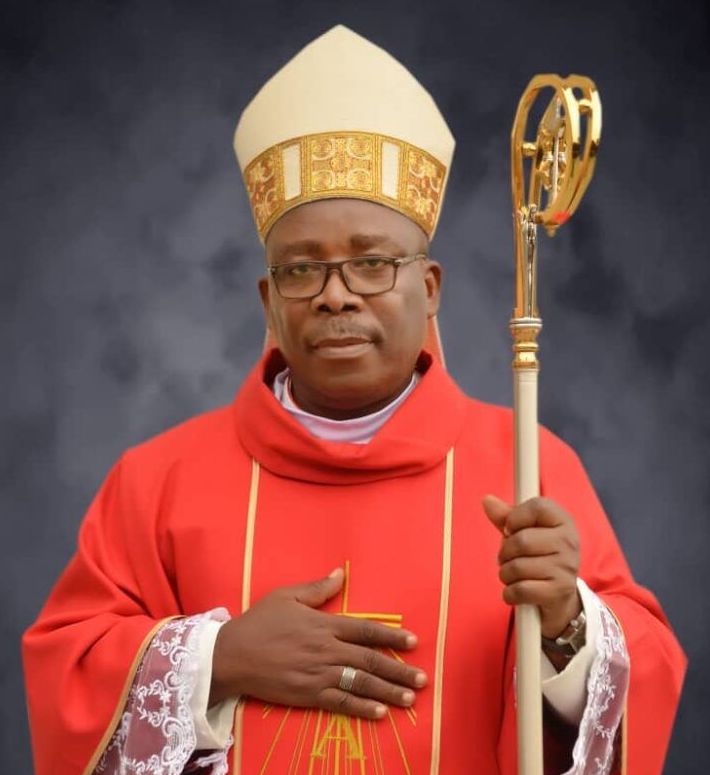
The opening Mass was presided over by Most Rev. Patrick Eluke, the Apostolic Administrator of Port Harcourt Diocese, who formally declared the conference open on behalf of the bishops of RECOWA-CERAO. Reflecting on the story of Susanna in the Book of Daniel, which formed the first reading at the Mass, the bishop urged theologians and students to allow theology to become “the voice of Daniel in contemporary society” a voice capable of defending truth, protecting the innocent, and confronting injustice wherever it appears.
In his welcome address, the Acting Rector, Prof. Luke Ijezie, described the gathering as a moment of serious theological responsibility rather than a routine academic exercise. He used the occasion to present the outcome of his recent visit to Rome and to one of the institute’s major partners, MISSIO Germany. The Rector announced significant developments for the institute, including the renewal of CIWA’s pontifical status, progress on the proposed licentiate programme in Canon Law, and strengthened international collaboration. The announcements were received with prolonged applause from participants.
Raising a question that framed the tone of the conference, Prof. Ijezie asked why Africa continues to be associated with suffering in the global imagination. Drawing inspiration from the constant appeals of Pope Leo XIV for social responsibility and solidarity, he called on public authorities to develop deeper sensitivity toward the plight of the poor in a society where, he warned, the principle of “survival of the fittest” is gradually replacing the culture of compassion.
The keynote address was delivered by Rev. Fr. Dr. John Odey, who traced contemporary suffering in Nigeria to historical and structural realities, particularly the Amalgamation of Nigeria in 1914. According to him, the forced union of diverse peoples created tensions that still manifest in poverty, political instability, and social fragmentation. He called for a sincere national dialogue capable of addressing the roots of collective suffering.
The Lead paper was presented by Rev. Fr. Dr. Gerald Umoren on the topic “Discerning African Traditional Interpretations of Pain, Misfortune and the Paranormal.” The paper examined African religious interpretations of suffering, the relationship between the visible and invisible worlds, and the place of God in human pain. Emphasising the African conviction that suffering is rarely meaningless, the presenter called for a theology that combines faith, solidarity, and cultural understanding in responding to human misery.
The session was chaired by Hon. Dr. Jir Joseph Ter, who insisted that theology must move beyond academic discussion and touch the concrete lives of the people. Contributions from participants further deepened the discussion, particularly the intervention of Prof. John Kennedy Opara, who emphasised the need for a theology of resilience capable of restoring hope and dignity in contemporary Africa.
The 2026 edition of the conference is expected to continue throughout the week with papers, panel discussions, and theological reflections centred on the mystery of suffering and the responsibility of the Church in responding to it in Africa today.
Related News
June, 19 2026
A historic visit: ciwa rolls out the red carpet for chancellor bishop alexis touabli youlo
A historic visit: ciwa rolls out the red carpet for chancellor bishop alexis touabli youlo
May, 18 2026
Ciwa celebrates 2026 comweek and 60th world day of social communications with grand festivities
Ciwa celebrates 2026 comweek and 60th world day of social communications with grand festivities
May, 04 2026
Ciwa honours very revd fr. prof. peter damian akpunonu at 60 years of priesthood
Ciwa honours very revd fr. prof. peter damian akpunonu at 60 years of priesthood
March, 28 2026
Ciwa concludes her 35th theology week conference
Ciwa concludes her 35th theology week conference
March, 25 2026
Bishop Eluke Declares 35th CIWA Theology Week Conference Open
Bishop Eluke Declares 35th CIWA Theology Week Conference Open